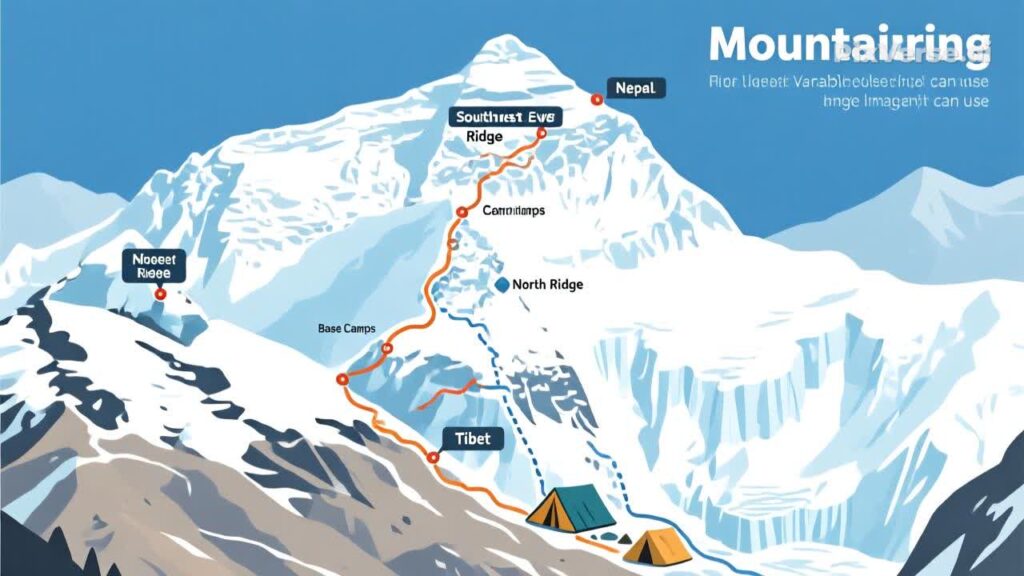
Introduction to Everest’s Legendary Ascent
Mount Everest has drawn adventurers for many years. At 8,848.86 meters high, it’s more than just a mountain—it’s a symbol of human determination, resilience, and the strong desire to achieve the impossible. Before anyone can try to climb it, they need to pick their route: the South Col Route from Nepal or the Northeast Ridge Route from Tibet.
Understanding the Two Main Routes
Everest may be the highest mountain, but climbers typically use just two main routes to reach the summit, which have been developed over decades to help navigate its challenges.
Why Only Two Routes Are Commonly Used
While Everest has many potential pathways, most are erratic, highly dangerous, and unexplored. The two established routes are equipped with fixed ropes, camps, and logistical support, making them realistic choices for climbers worldwide.
The South Col Route (Nepal Side)
Overview of the South Col Route
The South Col Route is the most popular and important path for climbing. Sir Edmund Hillary and Tenzing Norgay used this route during their first successful ascent in 1953.
Journey Through Base Camp
Your journey starts at Everest Base Camp. This camp is a lively place filled with tents, climbers, and Sherpas. Here, you will begin to adjust to the altitude and plan your climbing strategies before the actual climb.
The Khumbu Icefall Challenge
The first major obstacle is the terrifying Khumbu Icefall—a constantly shifting glacier filled with deep crevasses, towering ice blocks, and ladders straddling space. One wrong step here can be fatal.
Climbing the Western Cwm
After the Icefall, climbers enter the Western Cwm, a stunning but deceptively hot valley often referred to as the “Valley of Silence.”
Lhotse Face Ascent
Climbing the Lhotse Face means going up steep ice walls. Climbers use crampons to grip the blue ice as they move slowly toward high camp.
South Col to the Summit
From the South Col, climbers take their last steps to the top. They climb over the Hillary Step and walk along the ridges. The air is thin up high, making it hard to breathe.
Pros of the South Col Route
Improved access for rescues
Better organization for moving supplies
Historically, the safest choice
Cons of the South Col Route
Crowds are large during the busy season. –
The Khumbu Icefall is dangerous. –
The weather can change unexpectedly.
The Northeast Ridge Route (Tibet Side)
Route Overview
The Northeast Ridge Route is harder to climb but has fewer people. It gives climbers a different view of Everest and a unique cultural experience in Tibet.
Tibetan Base Camp Experience
Climbers begin at Tibet Base Camp, which is easier to reach by road and offers more comfort than the trekking route in Nepal.
Climbing the North Col
From the North Col, climbers make their way across steep walls covered in snow and ice. They use securely attached ropes to help them climb higher into the mountains.
The Three Steps
The famous Three Steps are well-known challenges—big rock formations that need careful and skillful climbing. They’re tough but totally worth it for the adventure!
Final Summit Push
The final stretch is an exhilarating ridge that unleashes the fury of fierce winds, challenging climbers as they push onwards to conquer the summit!
Pros of the Northeast Ridge Route
Reduced traffic
No Khumbu Icefall
Breathtaking views of the ridges
Cons of the Northeast Ridge Route
Fierce Winds Prepare yourself for the biting chill of harsh winds that challenge even the most seasoned climbers.
Challenging Climbing Routes Get ready to tackle some of the most demanding technical climbing experiences that will push your limits and fuel your passion for adventure. Tighter Permit Regulations from China
Navigate the new, stricter permit regulations imposed by China, adding an intriguing layer of complexity to your expedition planning.
Key Differences Between the Two Routes
Technical Difficulty
The South Col Route presents a significant physical challenge, whereas the Northeast Ridge Route demands more technical skills, particularly in navigating the Three Steps.
Weather and Environmental Factors
Nepal’s route is influenced by icefall movement, while Tibet’s side is impacted by stronger winds and colder temperatures.
Altitude Considerations
Both routes involve extreme altitudes, but the Tibetan side tends to keep climbers at higher elevations for longer periods.
Logistics and Permits
Nepal provides travelers with more straightforward access and a wider variety of expedition services. In contrast, Tibet has a more complex entry process that involves obtaining additional government approvals and navigating various travel restrictions.
Choosing the Best Route for You
Skill Level Requirements
For less experienced climbers, the South Col Route is more manageable, while elite climbers prefer the challenging Northeast Ridge Route.
Budget Considerations
The costs associated with climbing expeditions can vary greatly depending on the location and the level of service provided. In general, Nepal stands out as a destination that is both accessible and affordable for the majority of climbers. This is due to a combination of factors, including a well-established infrastructure for trekking and climbing, competitive pricing among local guiding companies, and the availability of budget-friendly accommodation and food options. As a result, climbers often find that they can pursue their adventures in Nepal without breaking the bank, making it an appealing choice for both novice and experienced adventurers alike.
Personal Climbing Goals
If you’re in search of historical significance, Nepal is the place to be. On the other hand, if you’re after a thrilling technical adventure, look no further than Tibet.
Preparation and Training
Physical Conditioning
To conquer the heights, climbers embark on a dedicated journey of preparation that lasts for months. They focus on enhancing their stamina, building unwavering strength, and developing the ability to thrive in high-altitude conditions. It’s not just training; it’s a transformative experience that equips them for the challenges ahead!
Gear Essentials
When you’re out on an adventure, there are a few essentials you definitely shouldn’t forget! Make sure to pack oxygen tanks, crampons, comfy layered clothing, ropes, and a handy emergency kit. These items will help keep you safe and ready for anything!
Acclimatization Needs
Embracing a slow and steady approach to acclimatization is the ultimate key to conquering altitude sickness and maximizing your chances for a triumphant summit! Get ready for the adventure of a lifetime!
The Everest Climbing Experience
Life at Base Camps
Base camps are vibrant hubs where climbers come together to share meals, inspiring stories, and essential updates.
Working with Sherpas and Guides
Sherpas are essential partners, possessing exceptional mountain knowledge and climbing skills.
Environmental Concerns on Both Routes
Waste Management
The increasing popularity of Mount Everest has resulted in significant pollution challenges. It is essential to implement proper waste disposal practices to protect and maintain the mountain’s natural beauty for future generations.
Sustainable Climbing Practices
Climbers should try to keep waste down, follow local rules, and back eco-friendly trips.
Conclusion
Scaling Mount Everest is not just about reaching a peak—it’s an exhilarating adventure that pushes your limits and ignites your spirit. Whether you venture along the iconic South Col Route or tackle the formidable Northeast Ridge Route, you’ll encounter stunning vistas, thrilling challenges, and moments that will transform your life forever. This majestic mountain commands respect and thorough preparation, but for those bold enough to take on the ascent, the rewards are simply unparalleled. Are you ready to answer the call of the mountain? Know us on Instagram.
H2: FAQs
Q. Which route is safer to climb Everest?
A. The South Col Route is safer because it has easier options for rescue.
Q. Which route is harder—Nepal or Tibet?
A. The Northeast Ridge Route from Tibet is more technical and exposed.
Q. Can beginners climb Everest?
A. Beginners should not attempt Everest; extensive mountaineering experience is required.
Q. Why are only two routes commonly used?
A. They are the most studied, supported, and logistically feasible.
Q. When is the best time to climb Everest?
A. The best seasons are pre-monsoon (April–May) and post-monsoon (September–October).